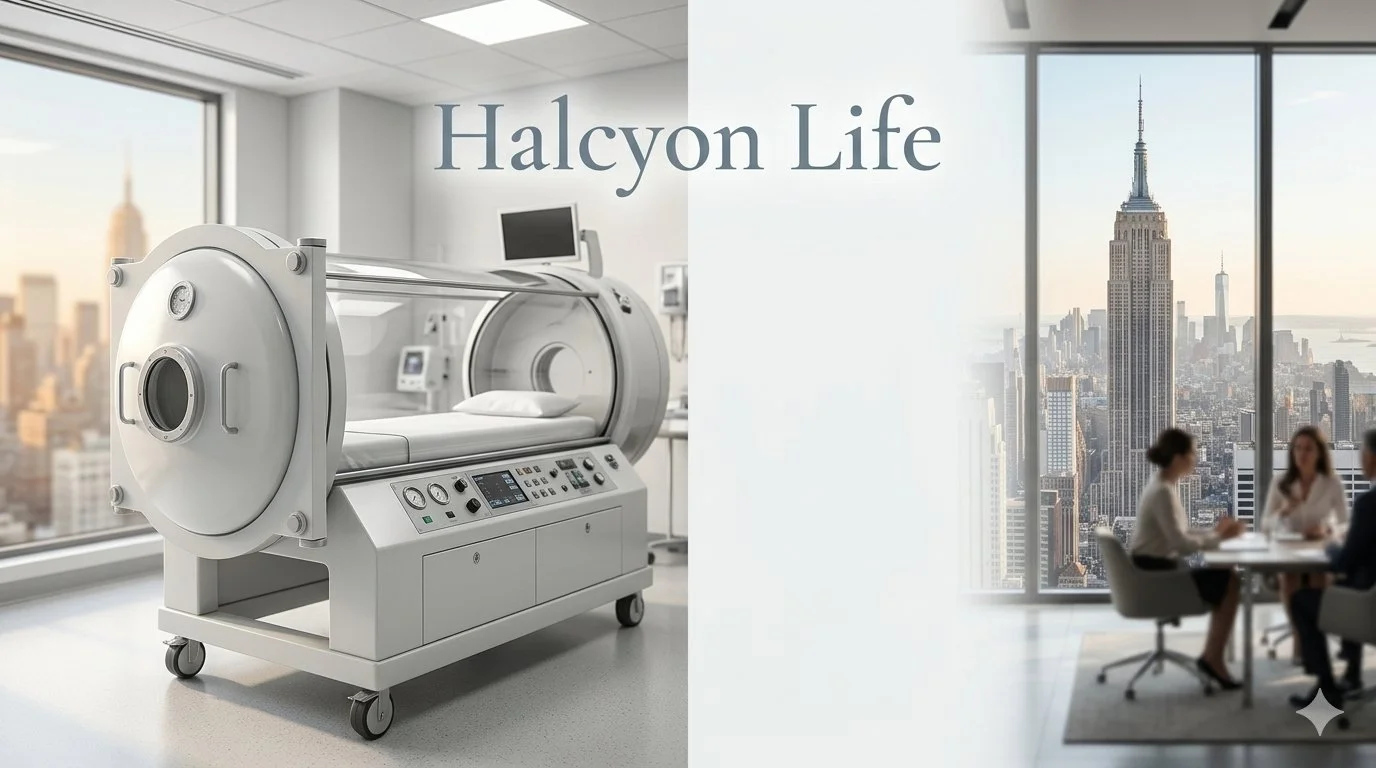
TL;DR: Finding Hyperbaric Oxygen Therapy in NYC
-
Know the chamber type
Hard-shell hyperbaric chambers operate at higher pressures than many soft, inflatable chambers. Always verify the chamber type and operating pressure before booking.
-
Understand treatment options
Hyperbaric oxygen therapy is an established treatment for specific medical conditions. Evidence and eligibility vary depending on the condition being treated.
-
Check insurance coverage
Coverage generally depends on the diagnosis, treatment indication, and insurer requirements. Many uses for chronic symptoms are not routinely covered.
-
Understand the total cost
Private treatment costs can vary significantly by provider, chamber type, and session length. Ask about package pricing and the estimated number of sessions before committing.
-
Choose a provider carefully
Look for transparent pricing, qualified medical oversight, appropriate safety procedures, and clear information about the treatment offered.
Explore Your Hyperbaric Oxygen Therapy Options
Learn more about hyperbaric oxygen therapy, understand the available options, and prepare the right questions before choosing a provider.
Living in New York puts a constant load on the body. Short sleep, noise that never quite stops, long workdays in finance, media, tech, and law, and very little true downtime. Over months and years, that wears down your capacity to recover faster than ordinary rest can restore it. Eventually many people go looking for something deeper than another supplement or another app, and they find hyperbaric oxygen.
Then they hit a wall. Real hard chambers are surprisingly hard to find across the five boroughs. Prices are rarely posted. And insurance, which people assume will help, usually says no. None of that is random. It comes from how chambers are built, how insurance decides what to pay for, and how hospital programs are set up. Here is how it actually works, so you can make a clear decision without wasting time or money.
Hard Chambers vs Soft Chambers: Why the Search Results Mislead You
Search "hyperbaric chamber near me" in Manhattan, Brooklyn, or Queens and you will see plenty of results. Many of them are soft chambers: portable, inflatable vinyl or fabric tubes with a zipper. They are relatively inexpensive, need no special installation, and fit easily into spas, chiropractic offices, and recovery studios. That is why they have spread so quickly.
The limit is pressure. Soft chambers typically top out around 1.3 ATA, roughly what you would feel ten feet underwater. Most are pressurized with ordinary air, and some add an oxygen concentrator through a mask, but the pressure ceiling stays the same. Hard chambers are built from rigid steel or thick acrylic and can safely reach 2.0 ATA and higher, which is where most of the published research sits.
Pressure matters because of how oxygen moves in the body. Hyperbaric Oxygen Therapy is a systemic modality that influences the human body on cellular and physiological level. At normal pressure, nearly all your oxygen rides on red blood cells, which are already close to full. Under real pressure, concentrated oxygen dissolves directly into the liquid part of your blood and into other body fluids, reaching tissue that struggling circulation cannot. Combined with air breaks, that swing in oxygen levels is what signals the body to start repair processes, including the release of stem cells. A soft chamber at 1.3 ATA is simply a different exposure. We break this down in detail in hard chamber vs soft chamber: what the difference means for your body.
So why are hard chambers scarce? They cost many times more than soft chambers, they need dedicated space and trained operators, and they come with stricter safety requirements. In a city where every square foot is expensive, few operators take that on, which leaves the market crowded with the easier option.
How to Spot a Real Hard Chamber When You Search
Listings rarely say what kind of chamber they use, and photos can be misleading. A few direct questions sort it out in one phone call:
What is the maximum pressure? If the answer is 1.3 ATA, it is a soft chamber, whatever the website calls it.
Is the chamber rigid or inflatable? A zippered tube is a soft chamber. A steel or acrylic shell with a sealed door is a hard chamber.
How is oxygen delivered, and are air breaks part of each session? You want a clear answer about the mask, the oxygen level, and the schedule, not a vague promise about "oxygen therapy."
If a provider cannot answer these plainly, that tells you something too. The best providers are happy to explain their setup, because transparency is part of good care.
The Insurance Wall: Who Decides What Gets Covered
This is where most people get stuck, and where most online information gets the facts wrong.
The list you will see quoted most often comes from the Undersea and Hyperbaric Medical Society, the main professional body for hyperbaric medicine. It recognizes 14 uses:
Air or gas bubbles in the bloodstream
Carbon monoxide poisoning
Gas gangrene
Crush injuries and other sudden loss of blood flow to a limb
Decompression sickness, often called the bends
Blocked blood flow, including sudden vision loss and certain wounds that will not heal, such as diabetic foot ulcers
Severe anemia when transfusion is not possible
Brain abscess
Severe, fast spreading soft tissue infections
Bone infections that resist antibiotics
Delayed radiation injury
Skin grafts and flaps at risk
Serious burns
Sudden hearing loss with no known cause
Here is the part almost nobody explains. Insurance does not simply follow that list. Most insurers follow Medicare's coverage rules, and Medicare keeps its own, narrower list. Sudden hearing loss is a good example. It is on the society's list, yet Medicare has no national coverage decision for it, which is why even recognized uses can stall in approval. We see this firsthand with sudden hearing loss, covered in sudden hearing loss in one ear: why the first two weeks decide everything.
And if your concern is not on any of these lists, the answer is almost always no. Post-viral fatigue, ongoing brain fog, long term inflammation, recovery and performance goals all fall outside the coverage framework, regardless of how much they affect your life.
If You Do Have a Covered Condition
If your situation is on the covered list, start with the insurance route. Ask your doctor for a referral to a hospital hyperbaric program, and ask the program directly how long approval and scheduling usually take. Covered care can save you real money, and that matters.
Timing is the one exception worth watching. For time sensitive conditions like sudden hearing loss, the window to act is short, and approval can take longer than the window lasts. In that case, it is worth knowing your private options in parallel, so a slow approval does not quietly decide the outcome for you.
Why Hospital Programs Do Not Fit Chronic Issues
Hospital programs do not accommodate cases outside the covered list. Their programs are built around what insurance pays for. That means wound care, radiation injuries, and other covered conditions, often with limited hours and long waitlists.
That leaves a real gap. Someone can be dealing with months of post-viral exhaustion or a nervous system that will not settle, and the hospital route effectively has no door for them. It is not that anyone is being unkind. The system is simply organized around billing codes rather than around the person in front of it.
The Real Cost of Going It Alone
Without insurance, people turn to private providers. In Manhattan, single sessions in a hard chamber commonly run $400 to $600, so a 20 to 40 session course can reach roughly $8,000 to $24,000.
Why so many sessions? A single, isolated session does nothing more than provide a temporary boost. The changes people come for, in recovery, energy, inflammation, and nerve function, build gradually. As per scientific studies, protocols typically range from 20 to 40 sessions. For example, Thom and colleagues measured an eightfold rise in circulating stem cells after 20 sessions, and randomized trials on post-COVID cognitive symptoms and on athletic performance used 40.
Consistency matters as much as the number. Sessions spaced too far apart, or a course abandoned halfway because the budget ran out, rarely deliver what people hoped for. That is why price is not a side issue in hyperbaric oxygen. It decides whether someone can finish what they started, and finishing is where most of the benefit in the research was measured.
That math stops many people before they start. And the people under the most strain, burned out, exhausted, recovering from illness, are often the ones least able to absorb a five figure bill. The cost of going without is real too: months of lost productivity, foggy workdays, and a slow drift away from feeling like yourself.
Many clients use HSA or FSA funds to help. For uses insurance does not cover, your plan administrator may ask for a letter of medical necessity, so ask your provider what documentation they can supply. For a full breakdown of pricing in the city, read what hyperbaric oxygen therapy costs in New York City and what drives the price.
What Access Should Look Like
Good care should not be reserved for people with the right billing code or the deepest pockets. It also should not feel like an emergency room visit every time you show up.
At Halcyon Life, we built the opposite. A modified hard chamber that reaches 2.0 ATA. Air breaks built into every session. Prices posted where you can see them before you call. No gowns or scrubs, so you can come in your regular clothes. And no paperwork maze between you and a straight answer about whether HBOT makes sense for you.
If you are comparing options, our guide on how to choose a hyperbaric chamber in New York without guessing covers what to ask any provider, including us. And if you want to know what the experience is like before committing, read what hyperbaric oxygen therapy actually feels like.
Living well in New York takes an honest look at your limits. Once you can see past the insurance maze and the crowded wellness market, the path gets simpler: a reliable environment, a consistent rhythm, and time for your body to rebuild its capacity. That is what makes daily life in this city feel livable again.
Frequently Asked Questions
-
Almost never. Insurance coverage is limited to a short list of acute conditions, so chronic fatigue, brain fog, and recovery goals are usually paid out of pocket.
-
Most insurers follow Medicare's list, which includes conditions like decompression sickness, carbon monoxide poisoning, radiation injury, and certain non-healing diabetic wounds.
-
Sometimes, but approval is often slow and inconsistent. Medicare has no national coverage decision for it, so many people end up paying privately to start in time.
-
They cost far more than soft chambers and need dedicated space, trained operators, and stricter safety requirements, so fewer providers offer them.
-
Soft chambers usually reach about 1.3 ATA. Hard chambers reach 2.0 ATA and higher, which is the range used in most published research.
-
Many people do. For uses insurance does not cover, your plan may ask for a letter of medical necessity, so ask your provider about documentation.
-
t depends on your goals and biology. As per scientific studies, protocols typically range from 20 to 40 sessions, and your plan should be set around your own response.