Post-Surgery Recovery with a Hyperbaric Chamber in NYC
The surgery is over. The recovery is just starting.
The procedure went well. Your surgeon is happy with how the incision looks. And yet you are still swollen, still sore, and more tired than anyone warned you about.
That gap between a successful surgery and actually feeling like yourself again is where most of recovery happens. It is also the part that gets the least attention.
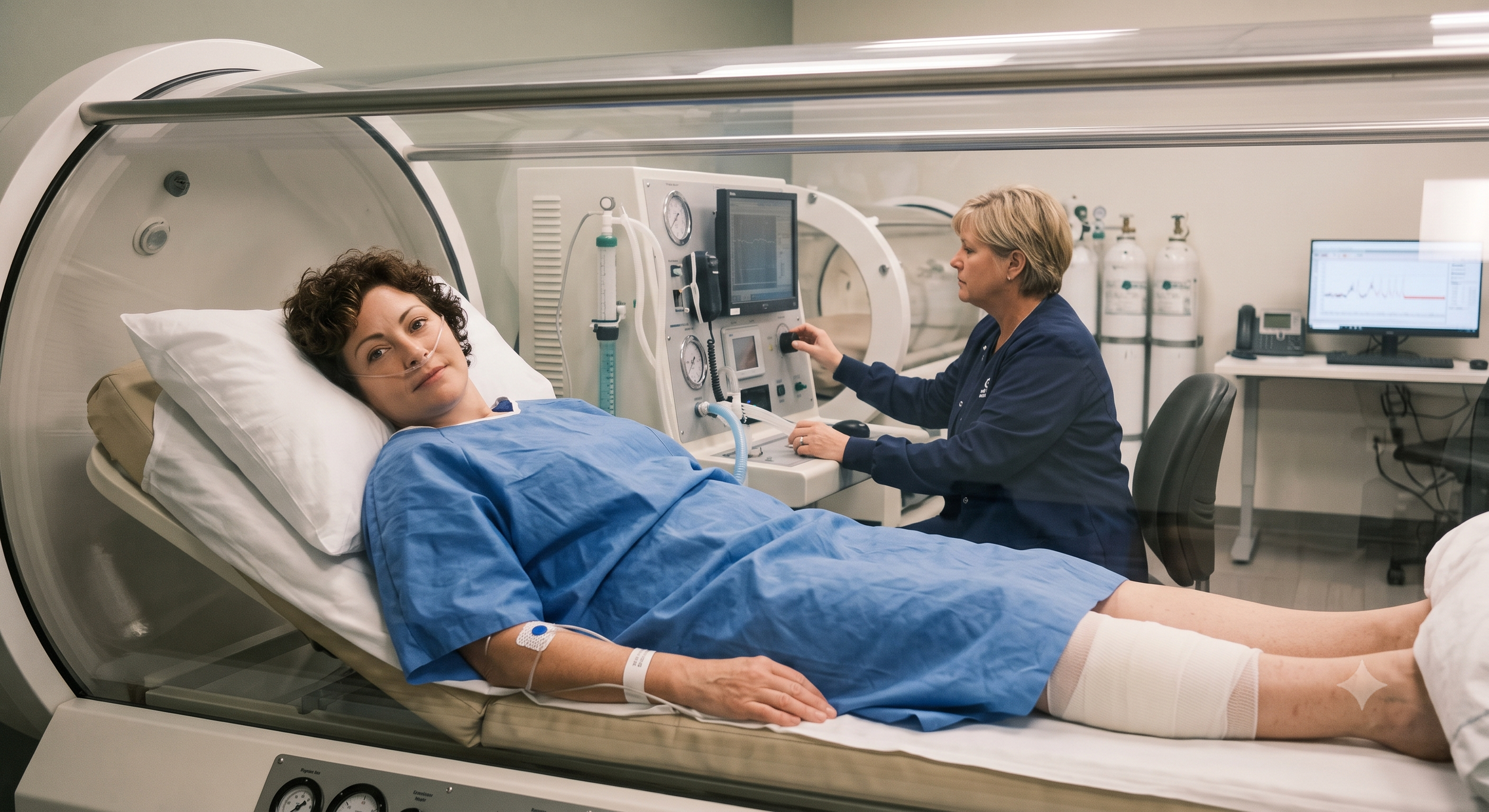
The Injury Behind the Incision
Every surgery, from a tummy tuck to a knee replacement, is a controlled injury. The surgeon works on one area. The whole body responds.
The immune system sends inflammatory signals to protect and rebuild the site. Blood flow around the incision is disrupted while small vessels repair themselves. Fluid collects in the tissue, which is where swelling comes from. Trapped blood breaks down slowly under the skin, which is what bruising is. At the same time, the nervous system shifts into a protective, high alert state, and sleep often gets worse right when the body needs it most.
None of this means something went wrong. It is normal surgical biology. The real question is whether the body has good internal conditions to move through it, or whether it is left to grind through on its own.
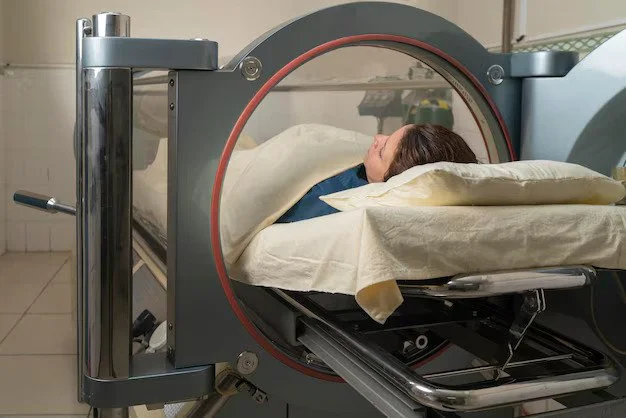
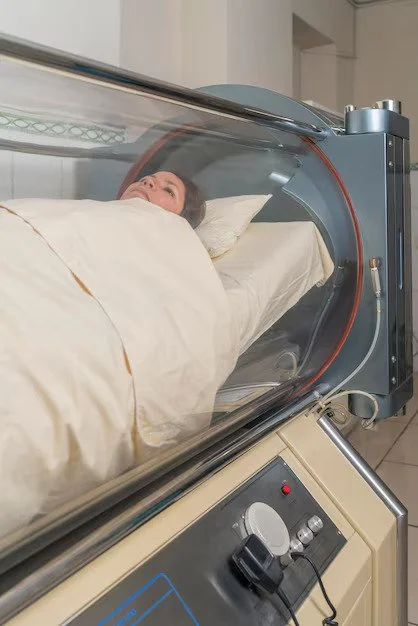
Hyperbaric Oxygen Therapy is a systemic modality that influences the human body on cellular and physiological level. Inside a pressurized environment, the body takes in concentrated oxygen in a way it cannot under normal conditions, and the effects reach well beyond the surgical site.
For surgical recovery, the relevant effects show up in four areas.
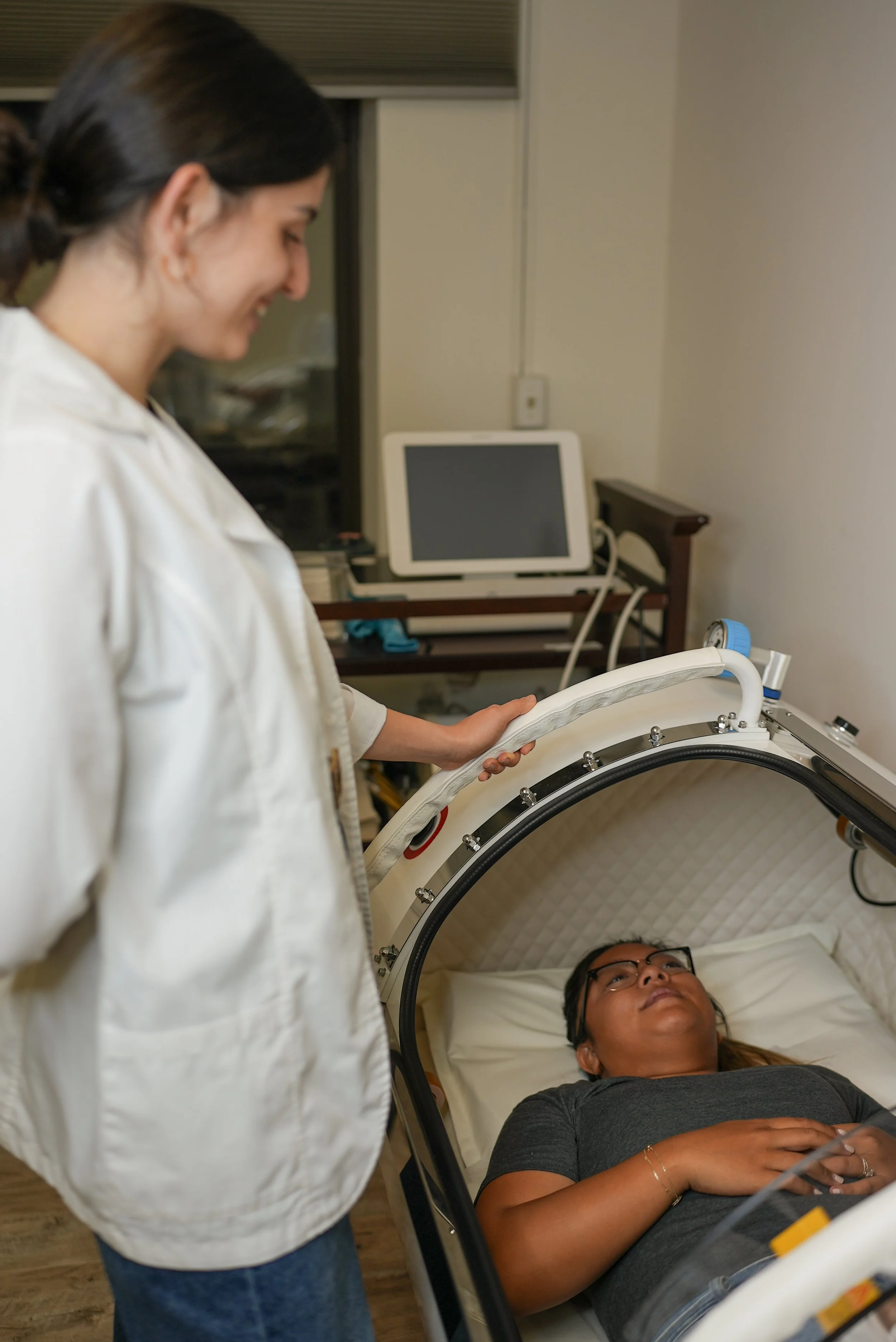
What HBOT Does for the Body After Surgery
Tissue Repair
New tissue and collagen are built in stages, and each stage depends on a healthy local environment. HBOT does more than raise oxygen levels. The rise of oxygen in the blood plasma, paired with a properly run air-break schedule, acts as a signal: it prompts the body to release more of its own stem cells and to grow new small blood vessels into the healing area. That is why wound healing is one of the most established uses of hyperbaric oxygen.
Inflammation Control
Inflammation after surgery is necessary. The problem starts when it stays loud longer than it needs to. HBOT may help the body regulate that response more cleanly, which is why many people use it when they want to reduce swelling and bruising after surgery.
Immune Regulation
A healing surgical site needs an immune system that is active and well coordinated. HBOT can be relevant to how immune cells do their work during healing, which is part of why hyperbaric medicine has been studied in wound care for decades.

Nervous System and Energy
Surgery leaves many people wired and exhausted at the same time. Anesthesia, pain, broken sleep, and stress all push the nervous system toward high alert. HBOT may help the body settle back into a calmer, more restorative state, which often shows up as better sleep and steadier energy.

Conventional Recovery vs. HBOT Supported Recovery
Conventional Recovery
- Rest, compression, and your surgeon's aftercare
- Focus stays on the incision site
- Swelling and bruising run their own course
- Sleep and energy left to chance
- Recovery depends on how depleted you were going in
HBOT Supported Recovery
- Same foundation, plus systemic support
- Supports the whole body's response, not just the site
- Aims for a more even resolution of swelling and bruising
- Supports the nervous system and sleep during recovery
- Builds recovery capacity around the procedure
HBOT does not replace your surgeon's aftercare. It supports the body that aftercare depends on.
Your surgeon will most likely recommend a supplement stack to support your recovery. HBOT can be a strong enhancer of most of them, supporting deeper regeneration, not just surface healing.
Plastic and Cosmetic Surgery Recovery
Cosmetic procedures like liposuction, tummy tucks, breast surgery, rhinoplasty, and facelifts often involve tissue that has been lifted or repositioned across a wide area, not just along one incision line. Swelling and bruising tend to be the main concern, and the timelines run longer than most people expect. Swelling after rhinoplasty, especially at the tip of the nose, can take up to a year to fully settle. Swelling after liposuction often runs for months, and firm, lumpy areas under the skin are a common worry along the way.
There is a reason surgical centers in countries known for cosmetic surgery, like Turkey, Brazil, and Thailand, commonly keep a hyperbaric chamber on site. Surgeons who work with it have seen enough in their own patients to make it part of recovery.
At Halcyon Life, we have worked with all of these procedures and have found ways to accommodate each one. We use specially comfortable masks, which matters when your face or nose is still healing. We recline clients instead of laying them completely flat, which matters after procedures like a tummy tuck, where lying flat pulls on the incision. Clearing your ears under pressure can be harder while your nose is still congested after rhinoplasty, and we plan for that as well.
HBOT works alongside lymphatic drainage massage and compression garments, not instead of them. We cover this in depth in our guide to HBOT for plastic and cosmetic surgery recovery in NYC.
Who This Is For
People recovering from plastic and cosmetic surgery
People recovering from orthopedic surgery, including joint and tendon repair
New mothers recovering from a C-section
People recovering from abdominal, dental, or reconstructive procedures
Anyone whose swelling, bruising, or fatigue is lasting longer than expected
Professionals who need to get back to work, travel, or training without dragging recovery behind them
People preparing for a planned surgery who want to go in with more in reserve
If you are coming back from a joint or tendon repair, our piece on HBOT after orthopedic surgery in NYC goes deeper. New mothers can read about HBOT for C-section recovery, where healing from a major surgery has to happen while caring for a newborn
When People Use HBOT Around Surgery
Before a planned procedure, to build recovery capacity in advance
Early in recovery, once your surgeon has cleared you
When swelling or bruising is not settling the way you expected
When sleep and energy are lagging behind the healing of the incision
Before returning to work, travel, or physical activity
After surgery, we generally work with one of two approaches. The first is five sessions on five days in a row. The second is two to three sessions a week over the four weeks that follow. With the longer approach, many people notice other benefits of HBOT building along the way, like clearer thinking, more energy, deeper sleep, and steadier hormonal balance.
We do not recommend HBOT the day before surgery or the day after it. Right around surgery, the body is busy sealing off small damaged blood vessels, and HBOT that close to the procedure can bring bruising up more easily and get in the way of that first step. Once that window passes, bruising starts to develop, move, and resolve, and that is the stage where HBOT supports the process instead of competing with it.
Which approach fits depends on the procedure, your baseline health, and your surgeon's guidance. Protocols should be aligned to your biology, not the other way around.
Screening and Safety After Surgery
Before your first session, you speak with us directly. We confirm that your surgeon has cleared you for HBOT and go over anything your surgeon told you that we need to know.
Our screening covers the points that matter after surgery, including:
A collapsed lung that has not been treated
Recent eye surgery that used a gas bubble
Recent ear surgery
Certain chemotherapy drugs, current or past
Pacemakers and other implanted devices
Surgical drains and wound vacuum devices
We also ask about smoking and vaping. Nicotine narrows the small blood vessels that healing depends on, and it changes how we plan your recovery.
Some of these mean waiting. Some mean adjusting the plan. A few mean HBOT is not the right choice right now, and we will tell you that directly.
What to Realistically Expect
Reduced swelling and real support for bruising to clear
A surgical area that often feels less tight and tender
Better sleep during the hardest stretch of recovery
Steadier energy for walking, light movement, and daily tasks
A calmer, less depleted feeling overall
Outcomes vary. They build over a series of sessions, not a single visit. They reflect a body being given better internal conditions to do what it is already trying to do.
What HBOT Is Not
We are direct with our clients about this.
It is not a substitute for your surgeon's post-operative instructions.
It is not a guarantee against complications.
It is not an overnight fix for swelling or bruising.
It is not a replacement for rest, nutrition, hydration, or wound care.
It is not right for every person at every stage of recovery.
It is a foundational layer that supports the recovery you are already doing. That is the honest frame.

When to Call Your Surgeon, Not Us
Some signs mean your surgeon needs to see you, and HBOT is not the answer. Call your surgeon right away if you notice:
Fever or chills
Redness around the incision that is spreading or getting darker
Drainage that is cloudy or smells bad
An incision that starts to open
Sudden, tight, painful swelling on one side, which can mean blood collecting under the skin
Calf pain or swelling in one leg, which can mean a blood clot
For shortness of breath or chest pain, call 911 instead of waiting.
The NYC Recovery Reality
New York does not pause for anyone's recovery. People are back at their desks, back on the subway, and back to full calendars within days of a procedure, whether their body is ready or not.
There is also the math most people never run. A procedure in this city can cost thousands of dollars, and major surgery far more. Then the most unpredictable part, the recovery, gets left to chance. A slow recovery has its own price: missed workdays, postponed plans, and weeks of not feeling like yourself in your own body. Against that, the cost of supporting recovery is often the smaller number. We break down what sessions actually cost, and why prices vary so much, in what Hyperbaric Oxygen Therapy costs in New York City.
For a wider look at HBOT for surgery recovery in NYC, or if you are weeks out and still exhausted, read about why you still feel wrecked weeks after surgery. It explains the part of recovery nobody warns you about.
How We Work With Surgical Recovery at Halcyon Life
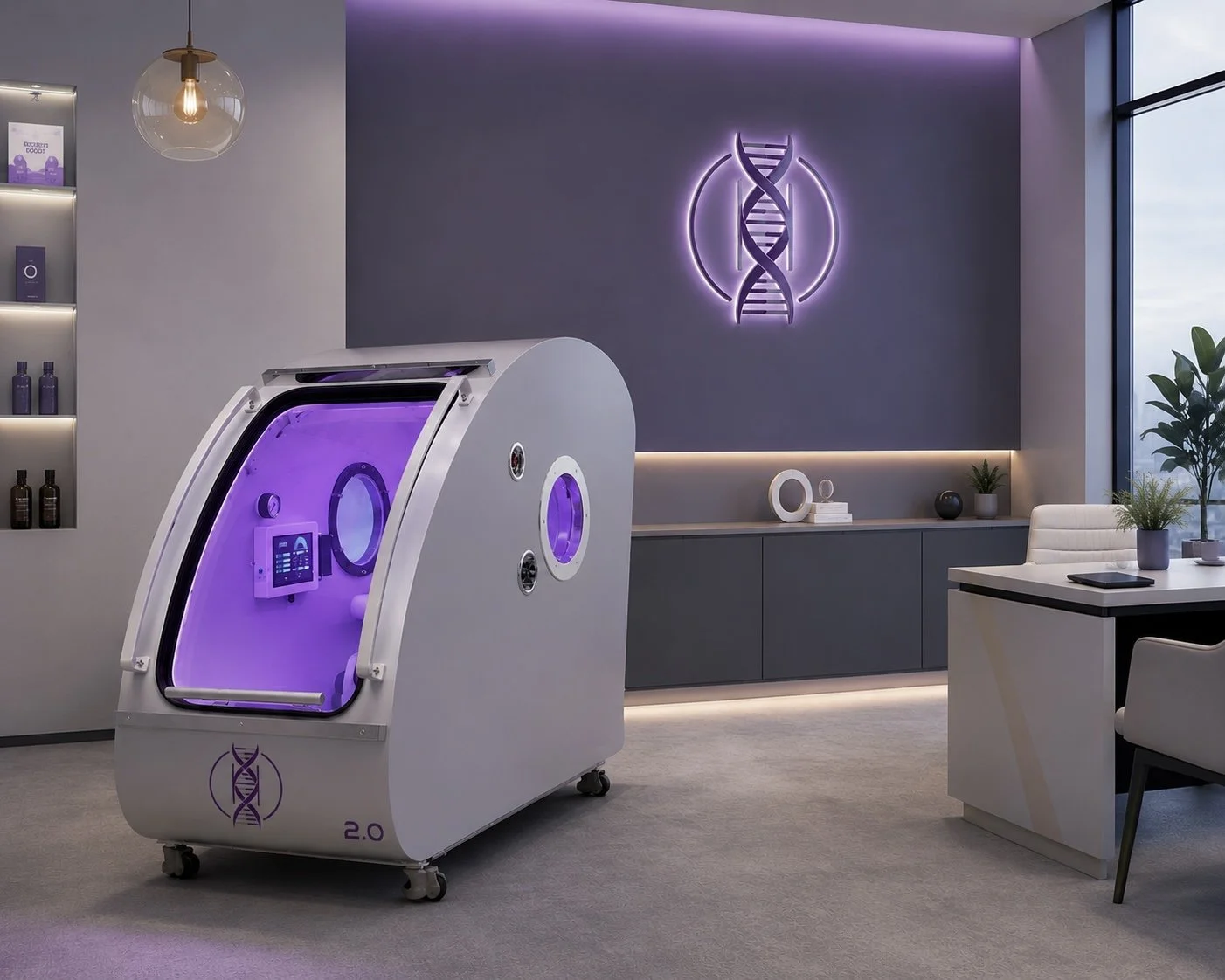
We do not run everyone through the same protocol.
We start with a conversation. What you are working through. What your sleep looks like. Whether you are recovering from illness, burnout, or simply the slow accumulation of NYC pace. What kind of cognitive output your life is asking of you. What the version of yourself you want to feel like actually looks like.
From there we build thoughtful, individualized pacing that supports the brain you actually have, not a generic version of it. The point is not to push harder. The point is to recover deep enough that life starts to feel like yours again.
Frequently Asked Questions
-
People use HBOT after surgery to support the body's own recovery process. It is most often used to help swelling and bruising settle, support tissue repair, and ease the fatigue that follows a procedure. Outcomes vary by person and procedure.
-
It depends on your procedure and your surgeon's clearance. We do not recommend HBOT the day before or the day after surgery. Some people begin soon after that window, and some start before surgery to build reserves. Before your first session, we confirm your surgeon's clearance on a call with you.
-
Yes. Swelling, bruising, and wound healing are where the effects of HBOT are best documented. The rise of oxygen in the blood plasma under pressure, combined with a properly run air-break schedule, works as a signal to the body rather than just a supply. It prompts the release of the body's own stem cells, the growth of new small blood vessels, and the production of collagen, the building material of new tissue. Less fluid leaks into the surgical area, so swelling comes down, and the damaged small vessels behind bruising are rebuilt. How much and how quickly depends on the procedure and the person.
-
Most people follow one of two approaches: five sessions on five days in a row, or two to three sessions a week over four weeks. The right choice depends on the procedure, the stage of recovery, and how your body responds.
-
For most people who have been cleared, yes. HBOT is meant to work alongside your surgeon's instructions, not replace them, which is why we ask about your procedure and clearance first.
-
Yes, some people do. Building recovery capacity before a planned procedure can be relevant, especially if you are going in stressed, underslept, or run down.
-
Halcyon Life offers Hyperbaric Oxygen Therapy in New York City at 347 5th Avenue in Midtown Manhattan, with pacing built around your procedure and your recovery rather than a one size fits all schedule.