Hyperbaric Chamber for Brain Injury: How HBOT Supports Recovery and Cognitive Function
How HBOT Supports Brain Recovery After Concussion or TBI
The brain doesn’t simply “bounce back.” When it’s injured — whether from a concussion, trauma, or repetitive impact — its most vital processes begin to falter. Oxygen flow declines. Inflammation rises. Communication between neurons slows. The result is a quiet but profound disruption in the way the mind thinks, feels, and recovers.
At Halcyon Life in New York City, we use Hyperbaric Oxygen Therapy (HBOT) to help the body restore these natural mechanisms from the inside out. This is not about forcing healing — it’s about recreating the biological conditions that allow the brain to remember how to heal itself.
[Learn how HBOT supports neuroplasticity and cognitive recovery]
Understanding Concussions, TBI, and Brain Recovery
After a traumatic brain injury (TBI) or concussion, the brain experiences a cascade of inflammatory responses. Blood flow becomes irregular, oxygen supply to damaged regions drops, and certain neurons enter a protective “hibernation” phase. This is why so many patients develop brain fog, memory issues, irritability, and fatigue long after the initial injury has passed.
Conventional medicine can only observe these symptoms — it can’t directly address the lack of oxygen and cellular repair at the root.
That’s where hyperbaric oxygen therapy in NYC offers something different: it works directly with your body’s most fundamental process — oxygen metabolism — to restore clarity and balance.
[Explore how HBOT restores cellular energy production]
How HBOT Works
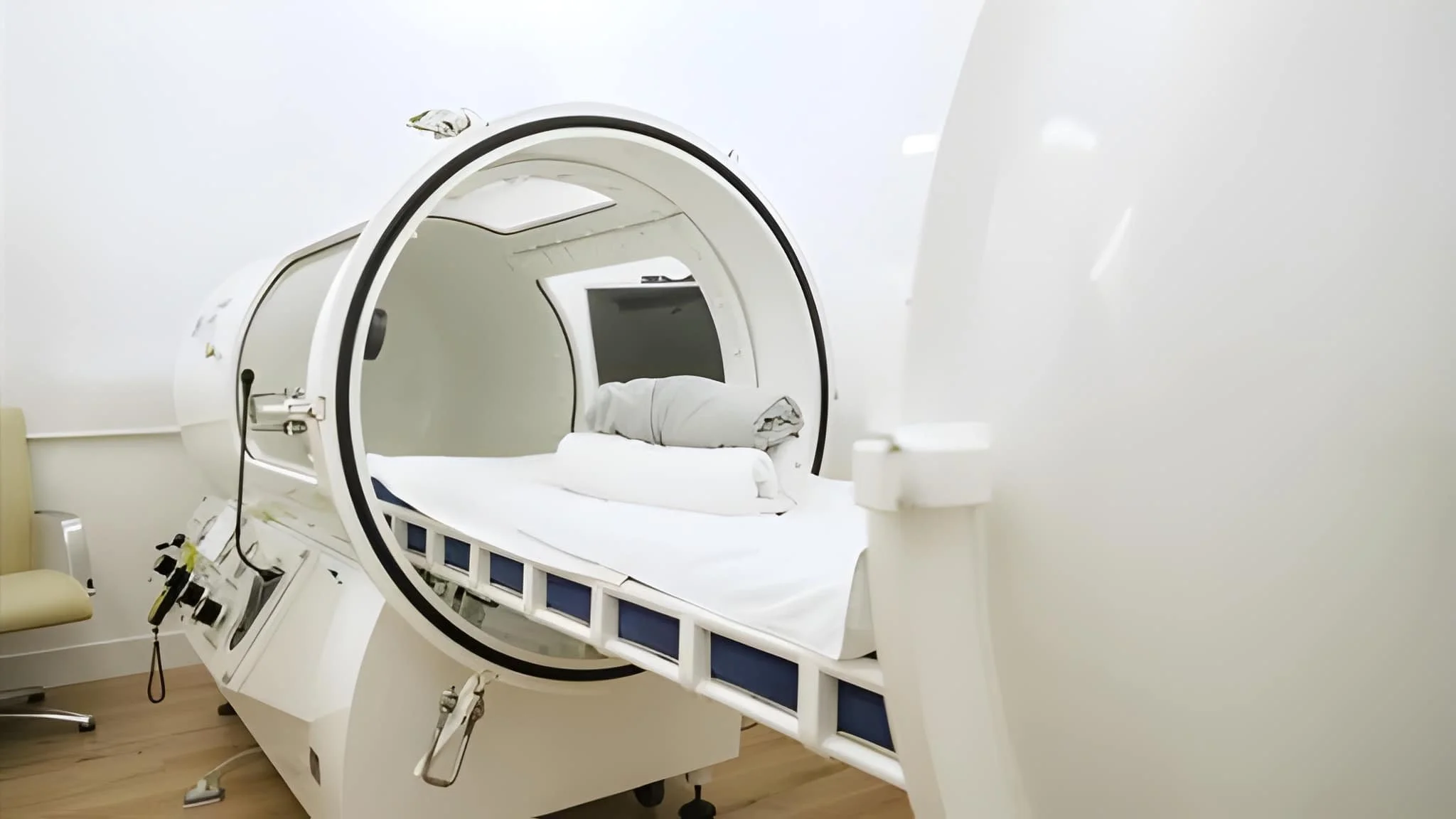
Inside the hyperbaric environment, you breathe 95% concentrated oxygen under pressure. This allows oxygen to dissolve not just into red blood cells but directly into plasma, flooding tissues that typically struggle to receive enough oxygen after injury.
In the context of brain trauma, this means that areas suffering from hypoxia (low oxygen) can finally receive the support they need to recover.
The increased oxygen concentration helps normalize inflammation, clear out cellular waste, and jumpstart mitochondrial function — your body’s natural energy production system.
[HBOT and mitochondrial repair research])
Reducing Brain Inflammation and Edema
Inflammation is both the brain’s defense mechanism and its greatest vulnerability.
After injury, immune cells release cytokines — inflammatory messengers that can linger long after the trauma has ended.
HBOT helps regulate these cytokines, reducing swelling and restoring blood-brain barrier integrity.
Clients often describe the experience as a “softening of the static” — a gradual reduction in the pressure and fog they didn’t realize they’d been carrying.
This isn’t about numbing the pain; it’s about restoring oxygen balance, the foundation of calm and function.
[How oxygen reduces inflammation and promotes brain health]
Improving Oxygen Delivery and Energy Flow
When you increase oxygen saturation in plasma, you bypass the limitations of damaged red blood cells and capillaries. This allows oxygen to reach deeper areas of the brain that were previously starved.
The result?
Better neural communication
Improved cognitive speed and recall
Enhanced mental clarity and resilience
These aren’t quick fixes; they’re measurable shifts in how the brain’s energy systems operate. HBOT is one of the few therapies that directly improves oxygen utilization and mitochondrial efficiency — the cornerstones of true recovery.
[Oxygen therapy and brain metabolism]
Supporting Neuroplasticity: The Brain’s Ability to Rewire Itself
Neuroplasticity — the brain’s ability to form and strengthen new pathways — is the biological foundation of recovery.
After TBI, damaged neurons often fail to communicate effectively, leading to dysfunction. HBOT enhances this process by improving oxygen supply to the glial cells and synaptic junctions responsible for learning and memory.
Over multiple sessions, clients frequently report enhanced focus, memory recall, and emotional stability — all signs that the brain’s wiring is coming back online.
[HBOT and neuroplastic recovery in NYC]
Cognitive and Emotional Balance Through Oxygenation
Oxygen doesn’t just repair — it regulates.
When the brain receives adequate oxygen, it can better balance neurotransmitters like dopamine, serotonin, and GABA, which govern mood and emotional equilibrium.
That’s why clients often report reduced anxiety and irritability following consistent sessions.
For many living with post-concussion syndrome, this emotional stability is as life-changing as the cognitive clarity that follows.
[HBOT for mental health and anxiety regulation]
Comfort and Safety at Halcyon Life
Our environment is designed for calm, safety, and relaxation.
Sessions are non-invasive, and clients rest comfortably while the chamber gently pressurizes.
The oxygen concentration is carefully balanced to deliver optimal benefits while keeping the experience tranquil and restorative.
Many describe it as a meditative state — an opportunity to reset, not just physically but mentally.
[What to expect during your first HBOT session]
Realistic Outcomes: What to Expect
Healing the brain takes time. Most individuals begin to notice improvements after several sessions — clearer thinking, steadier emotions, deeper sleep, and a general sense of “coming back.”
Over time, these small shifts accumulate into tangible transformation.
HBOT doesn’t replace good nutrition, rest, or mindfulness — it enhances them. It gives your biology the oxygen it’s been missing to support everything else you’re doing right.
Conclusion: A New Chapter for Brain Recovery
Hyperbaric oxygen therapy for concussion and brain injury represents more than a treatment — it’s a restoration of possibility.
It’s not about miracle cures or medical promises, but about creating an environment where the body’s natural intelligence can do its work again.
In a city that never stops, HBOT in NYC is one of the few spaces designed to help you pause, breathe deeply, and recover the clarity your mind deserves.
[Book your HBOT session in New York City])
FAQs About HBOT for Brain Injury
What does a hyperbaric chamber for brain injury do?
It delivers concentrated oxygen under pressure to help oxygen reach areas of the brain that need support.Can hyperbaric oxygen therapy help with brain fog?
Yes, symptoms of brain fog and low energy decrease, as clear thinking, focus and high energy increase.Is the chamber experience comfortable?
Yes — clients recline in comfort and often find it deeply relaxing.How many sessions are needed?
Depending on the concussion, or damage done to the brain and duration between the incident the incurred, and start of HBOT sessions. General consensus is 20-40 sessions for best results.Does HBOT build new cells?
Not directly — but it does something arguably more powerful. HBOT enhances the brain’s ability to form new connections around damaged or inactive tissue, a process known as neuroplasticity. By improving oxygen delivery and mitochondrial function, the therapy helps once “silent” areas of the brain re-engage, allowing neighboring cells to take over lost functions. In this way, HBOT doesn’t just preserve what’s left — it helps the brain rebuild pathways that restore what was thought to be gone.